09 June 2026
Some thoughts and tips on how we navigate Europe.
Toll Booths
Some toll booths in France require payment when you first enter the highway. Most require you to take a ticket first, often requiring you to get the car VERY close to the dispenser, resulting in continuous beeping from your car monitoring system. The biggest change since our last trip is that Italian toll booths now accept contactless (Apple Pay for us) payment instead of cash. Big improvement! No more scrambling for coins.
But quickly choosing the right lane at the toll booths can be challenging. Unfortunately, as non-resident Italians, we cannot get the transponder that would let us sail through the yellow lanes. A few times, we had to back out of the transponder-only lanes. Luckily, there were no cars behind us.
Navigation Apps
While driving we use three navigation apps. Waze on the car’s screen for highway driving. (Most rentals now have screens and Apple CarPlay.) Google map on the phone in Bonnie’s lap serves as a backup. Apple Maps as an additional backup because sometimes the Waze app goes wonky.
For pedestrian routes Bonnie prefers the Google map, although in dense central cities like Rome it may not always get a reliable signal and gets confused about where you are. Robert prefers Apple.
Relying on a single app while driving is risky. An app like Waze can suddenly disappear when you need it or unexpectedly show a ridiculous route.
We also notice that the voice may say “turn right” when the map shows “turn left.” The map is the most reliable.
The last three or four miles of a trip are the most demanding. You may have sailed along the highway for 200 miles without a problem, but navigating the last stretch into a central city to an Airbnb gets complicated. Roundabouts, five-way intersections, confusing merges, desperate scanning for street names, deciphering traffic symbols, avoiding no traffic zones, staying on the left, finding legal parking. Whew.
Electronics
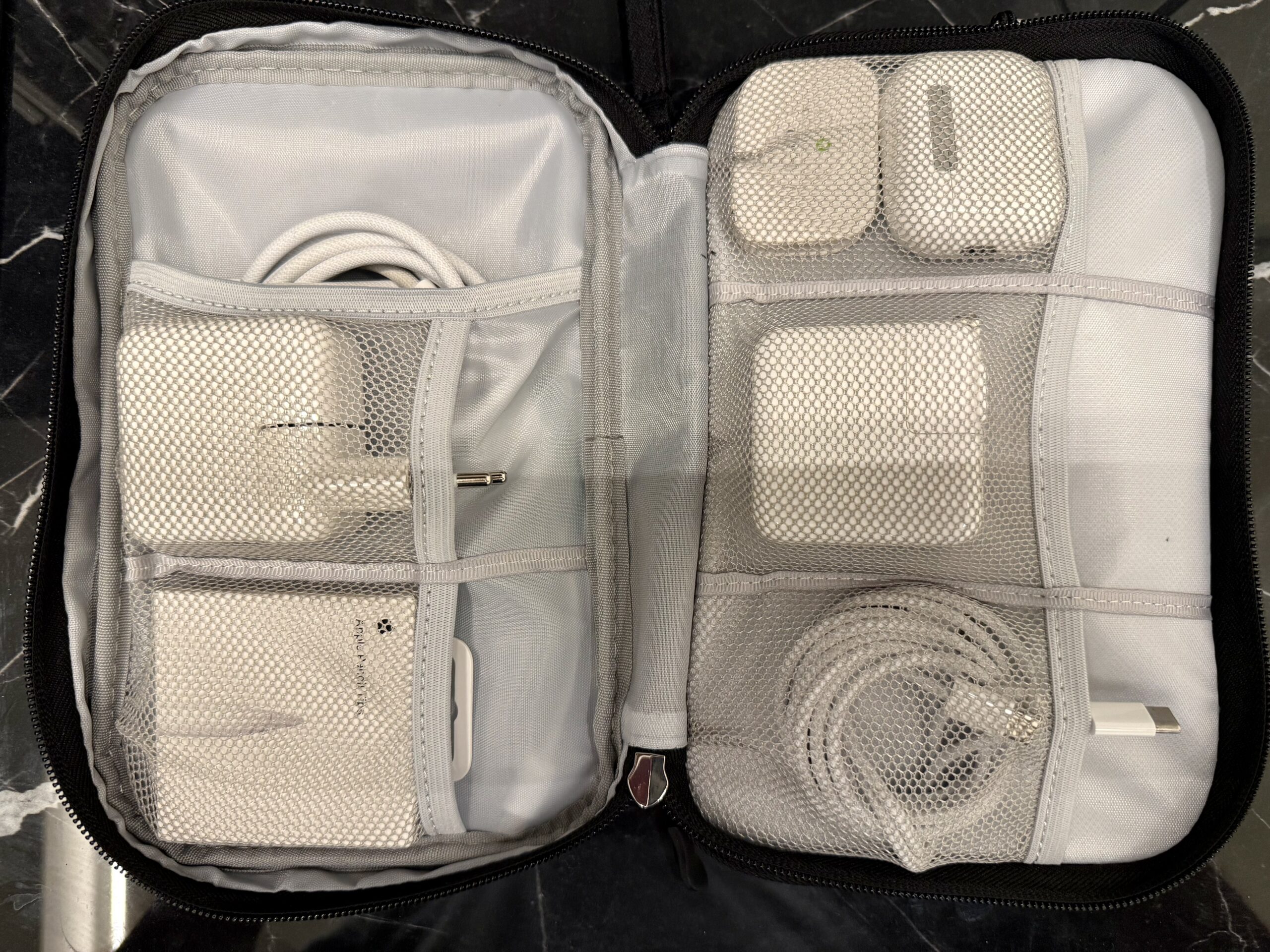
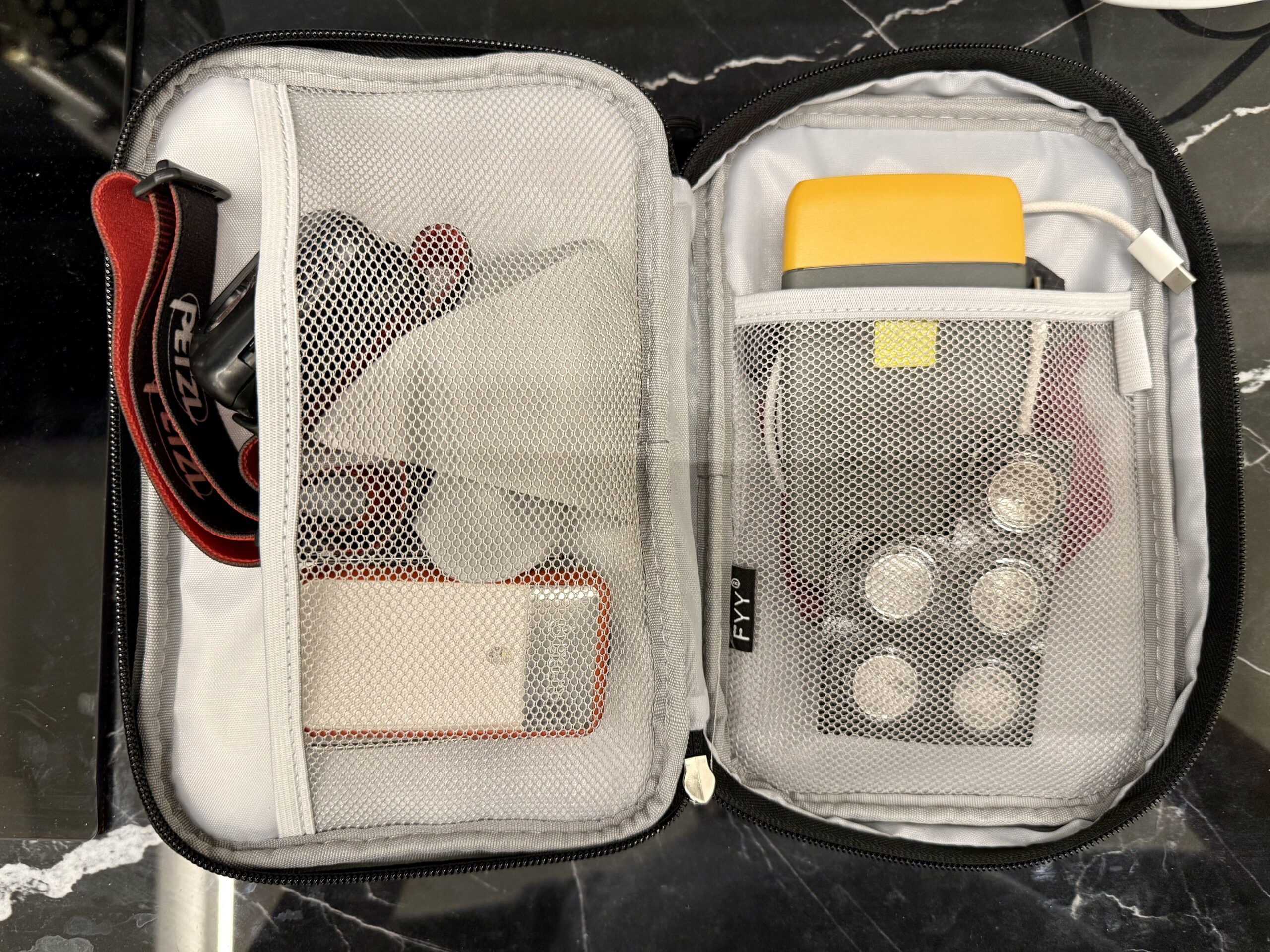
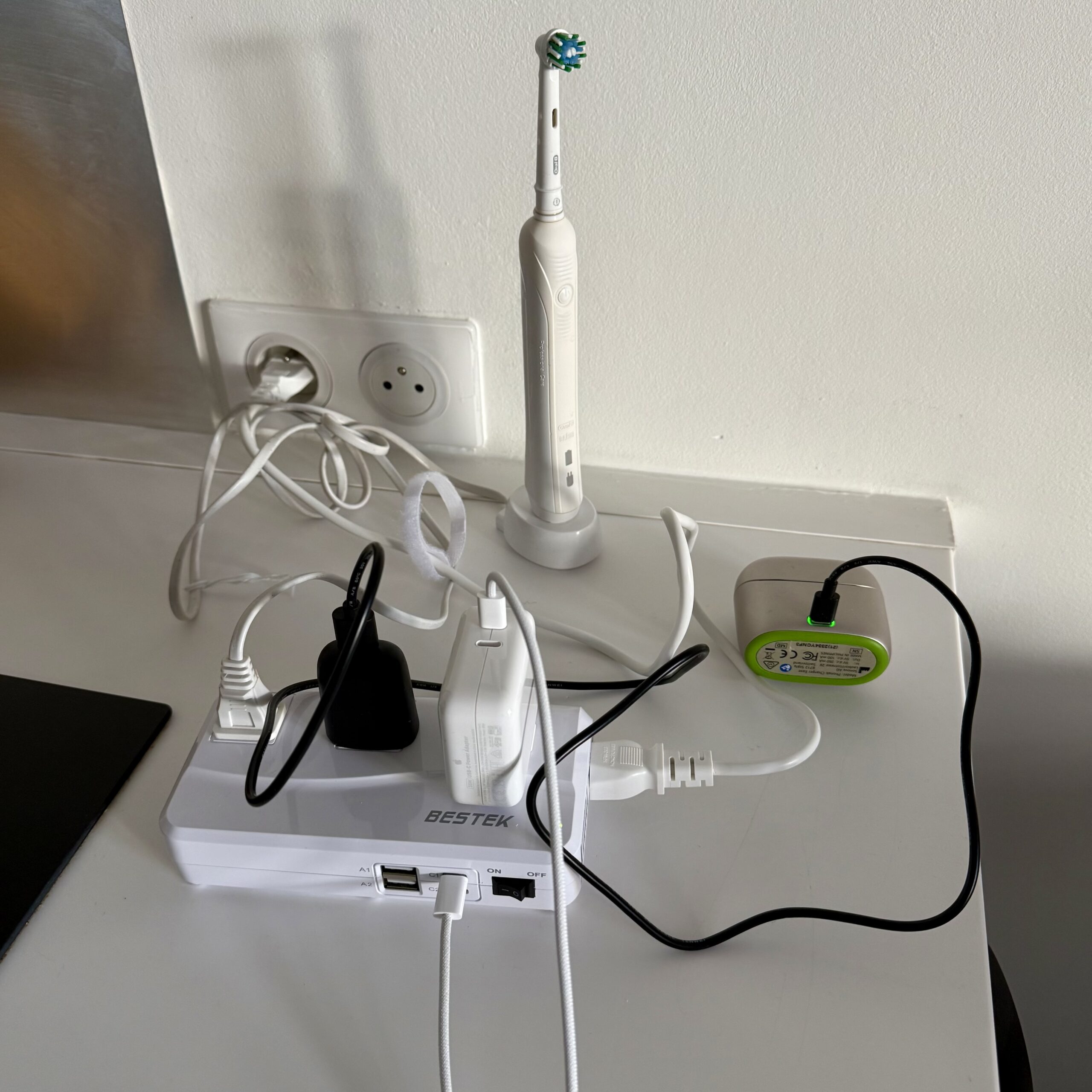
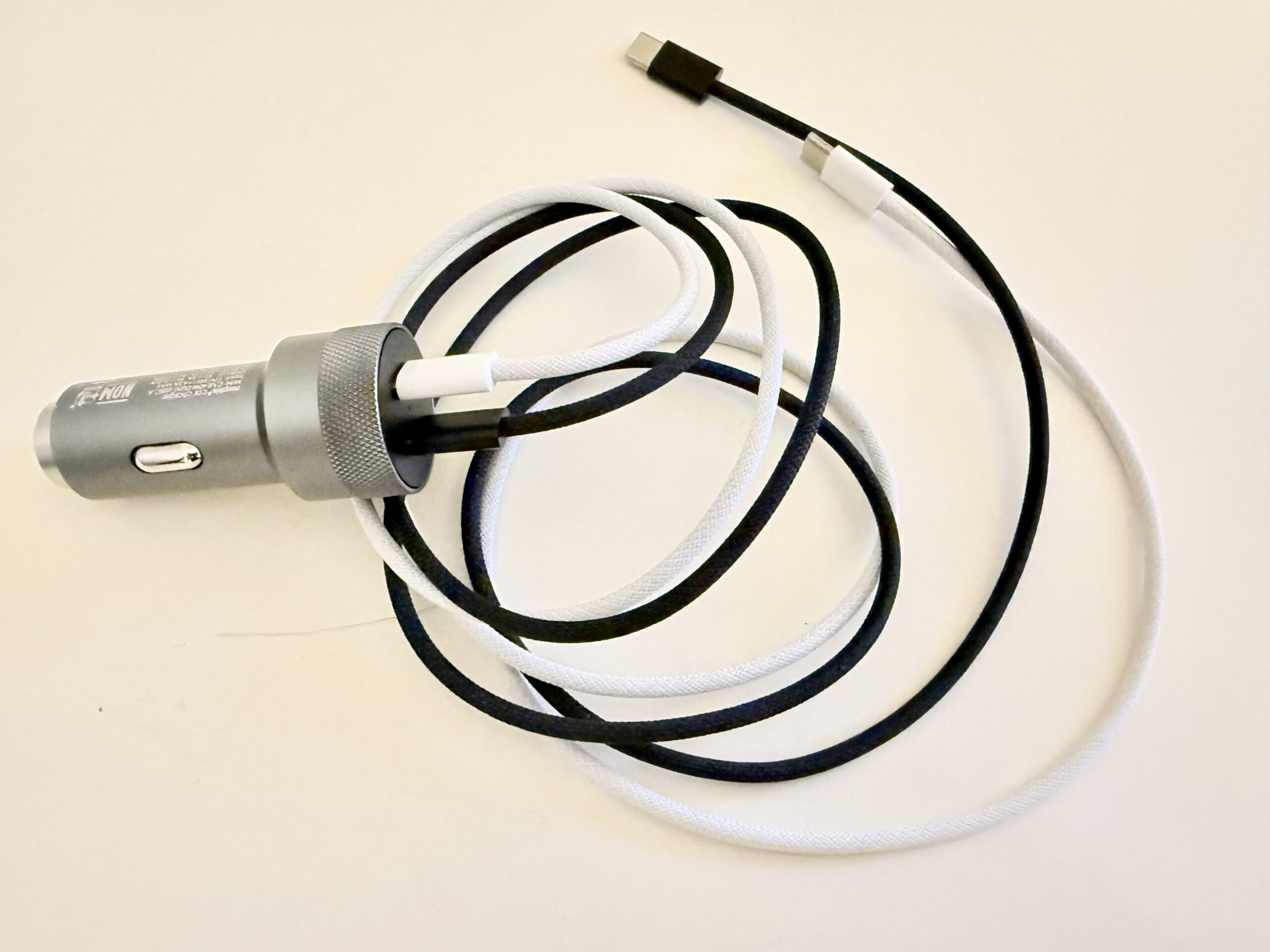
To support our iPhones, iPads, and additional electronics, we brought a variety of adapters that include a charger adapter (cigarette lighter) with two cords for the car. One long cord and a charging port with an Apple adapter goes by the bed for charging at night. A range of adapters—one set for the Bestek charging station and one set for the Apple plug ins. The Bestek charging station accommodates American plugs and several charging ports.
We also bring a battery pack capable of charging two iPhones. The one we have used for almost 10 years showed signs of lost capacity. Time to buy a replacement.
Phone Tethers
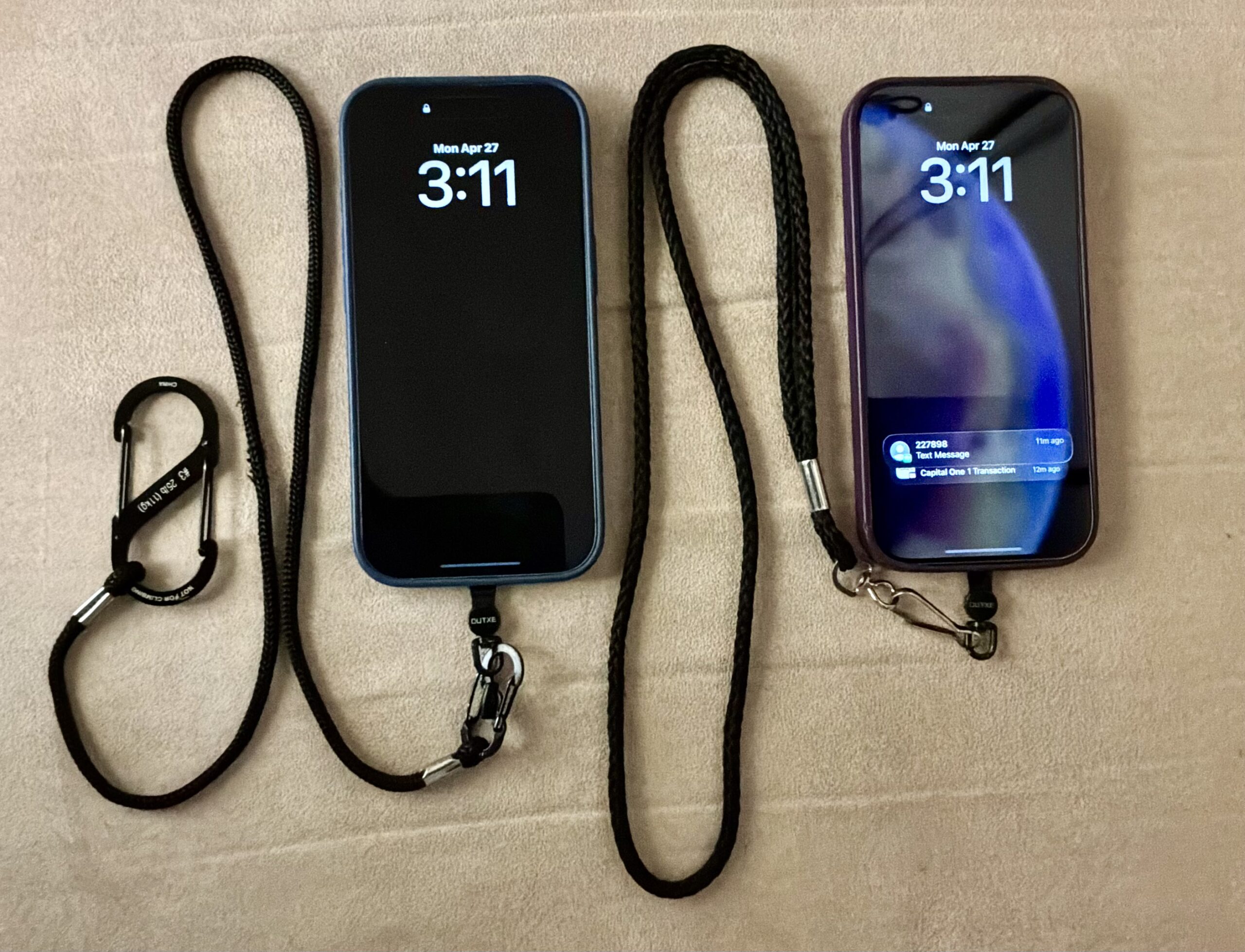
After Robert’s iPhone was pickpocketed in Rome during our last trip in 2024, (after he foiled an earlier attempt and we witnessed attempts on other people), we decided to tether our phones. Yes, theft happens at home too, but it is so much more disruptive when it happens during a trip. Most pickpocket attempts are at the most crowded subway or bus stops as everyone is surging into the car and the doors are about to close.
Bonnie was dissatisfied with the tethers she found on Amazon, so we improvised with lanyards from conference name tag badges, which work well. (Robert was well supplied.) Bonnie used Amazon to buy the little tags that fit between the phone and its case to link the phone to the tether.
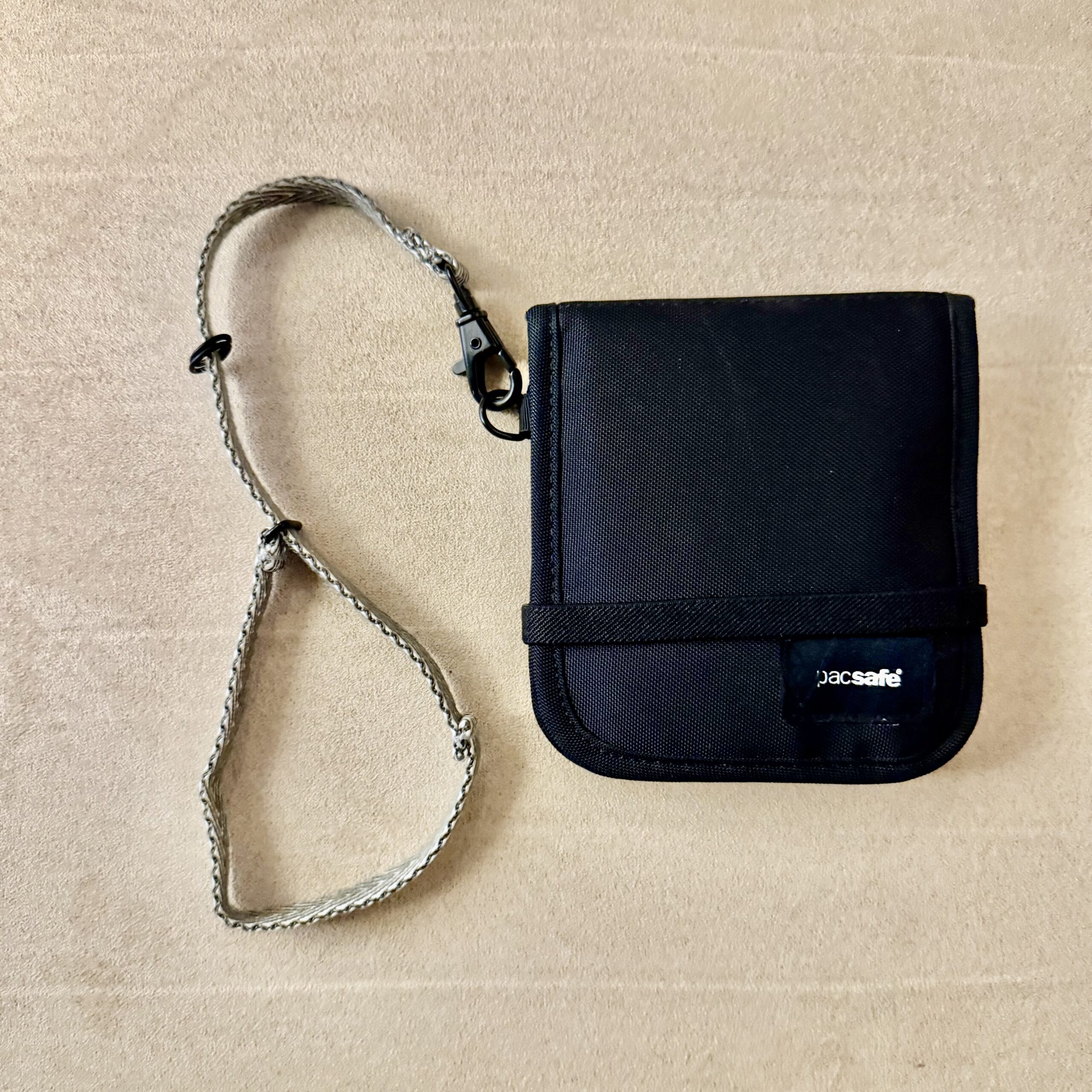
Robert made his tether one length secured to a belt loop with gear from REI. Bonnie’s tether goes around her neck and she is rarely without it. Seldom uncomfortable. She can also tuck her tethered phone into the back pocket of her cross-body purse against her chest if the crowds are dense, or zip her jacket over everything. Apple now sells a version of Bonnie’s tether. During his travels, Robert connects his wallet to his belt with a loop strap. He puts an AirTag in his wallet, too.
Bonnie uses a money belt for a day of traveling through airports to contain her passports, credit cards, and cash.
Apple Pay or Cash?
Apple Pay (or just tapping your credit card) is now available throughout Italy and probably all of Europe. There is no problem in using the “carta” for very small or large purchases. Unlike in New Zealand, the screen does not announce the credit card’s extra cost to the merchant that you must accept. All included. Most restaurants have the small portable machines they bring to your table. At other restaurants you to go up front to the counter, the “cassa,” to pay.
Many restaurants in Scotland now include an optional gratuity of 10-12.5%. They will ask if you agree to this. You need a little cash in Italy because many lodgings only accept cash to pay the local commune’s tourist taxes. This is usually just a few euros a day.
Sometimes the payment screen asks you whether you want to pay in US dollars or euros. Always choose euros, or pounds, or whatever is the local currency. The exchange rate will be better. No reason to chose dollars.
Also, before you leave home, print out a list of banks that offer “no fee” atms in cooperation with your debit card bank.
Passports for Lodging
In Italy all hotels and Airbnbs require guests to show their passports for registration, whether you are a citizen of Italy or not. It’s easiet to have a photo of the main passport page available to send to hosts to save time of photographing it every time.
Trip Itinerary and Documents
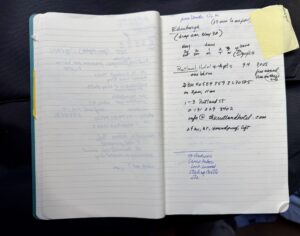
Robert uses Books on the iPhone to record all the important documents for the trip: licenses, passports, car rental agreements, flights, etc. Bonnie records the details of bookings in a Moleskin notebook (teal this time). One page per hotel/airbnb. Otherwise she is drowning in emails from Airbnb and others. (A single booking might involve a dozen emails, all with different details. And if she has even three bookings in a week, it can be impossible to track down which single email has the street address of the apartment.) Then when Robert asks if the apartment next week in Ravenna has a washing machine, she knows where to find it quickly.
Robert also prints a set of the travel documents as well as passports. This came in handy at the car rental desk when he was told that he had made a partial payment and owed more. Not the case. Or when Bonnie lost reception in an airport corridor and couldn’t pull up her airline reservation. Also, it may be smart that when you check in at the airline counter, request a paper ticket as backup to your phone.
Backpacks
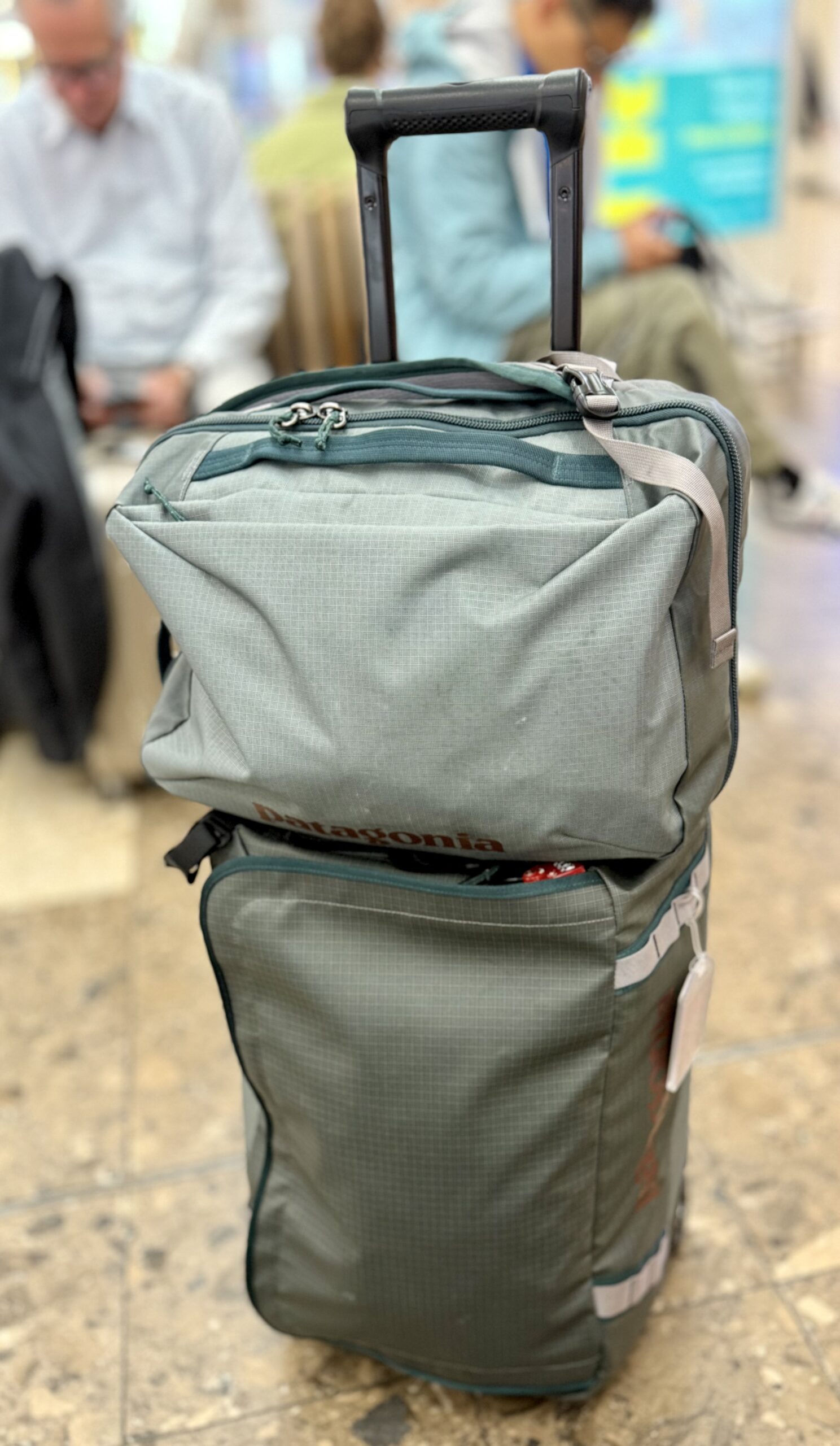
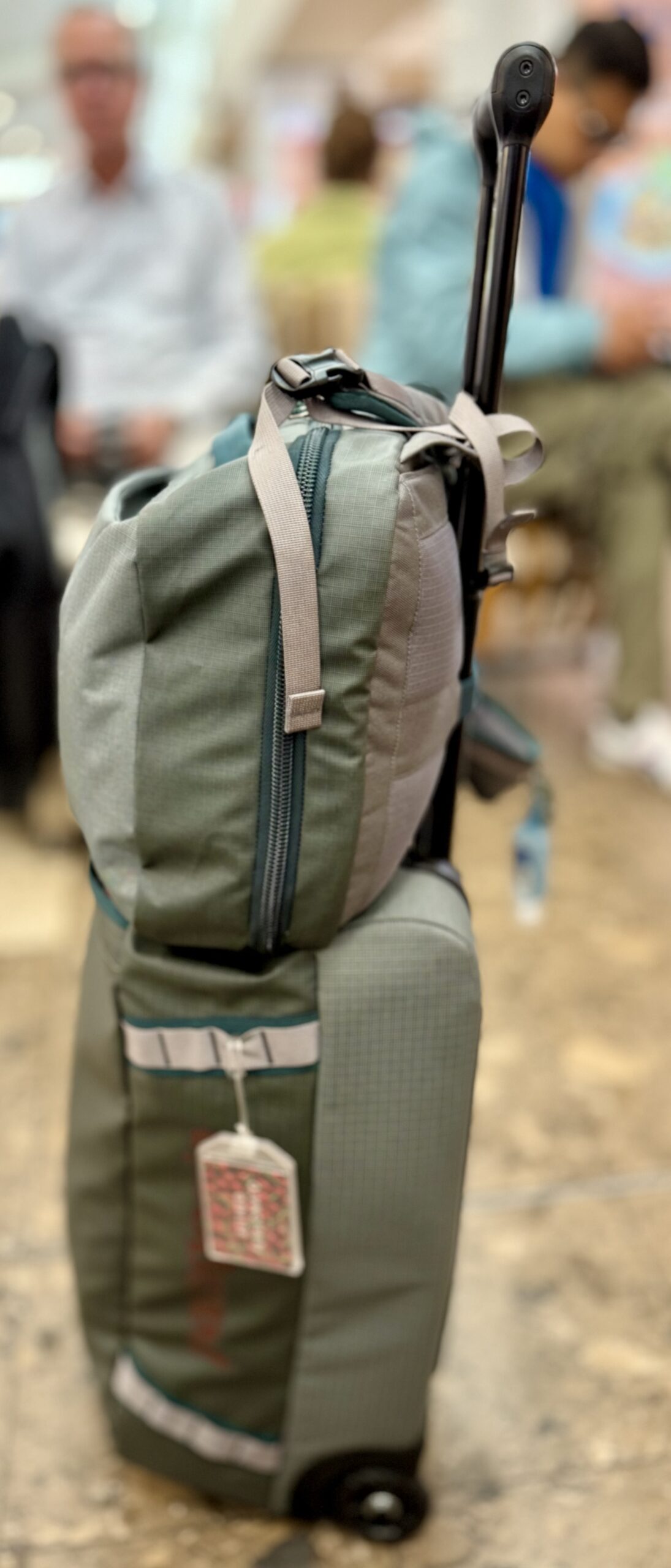
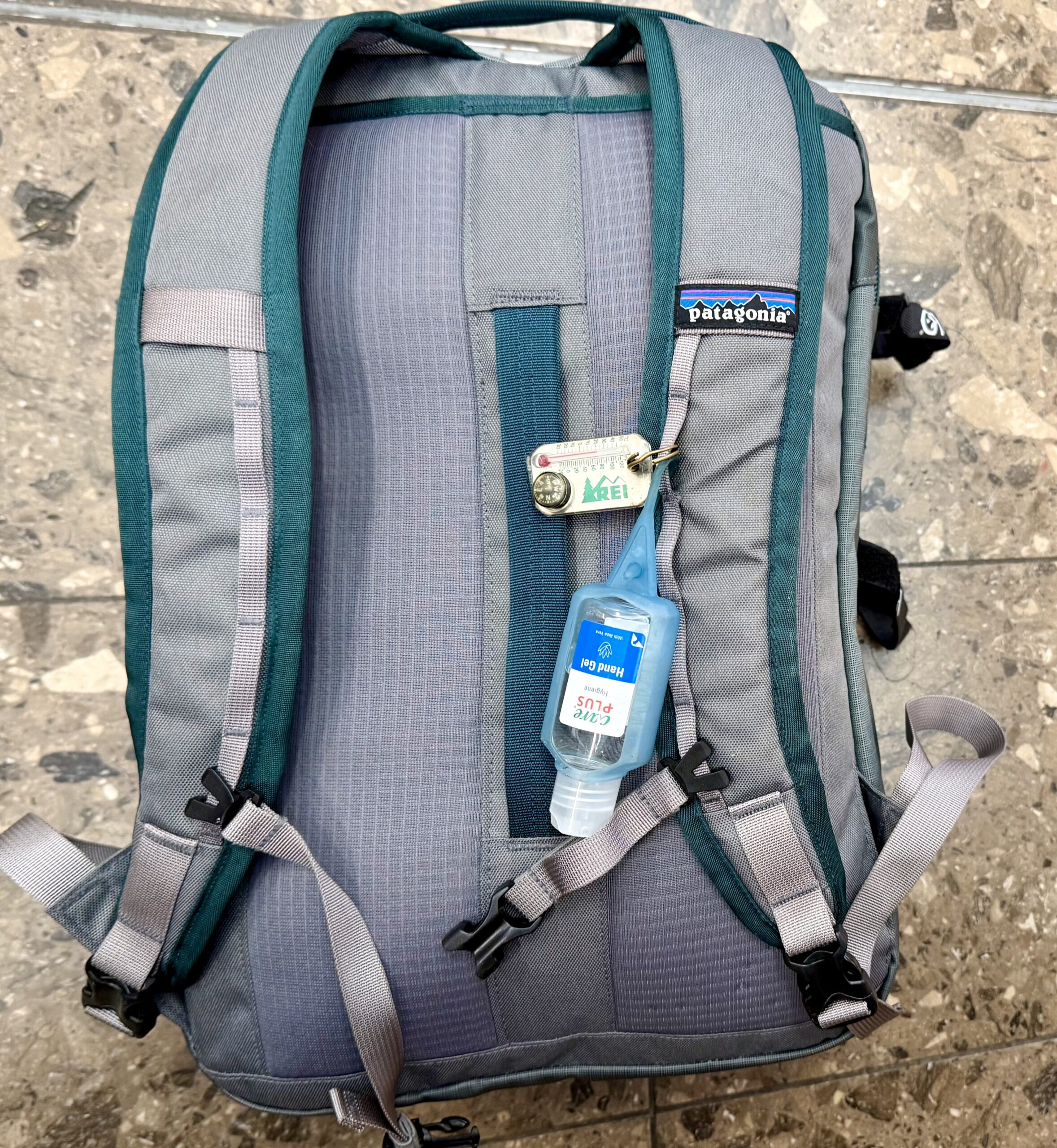
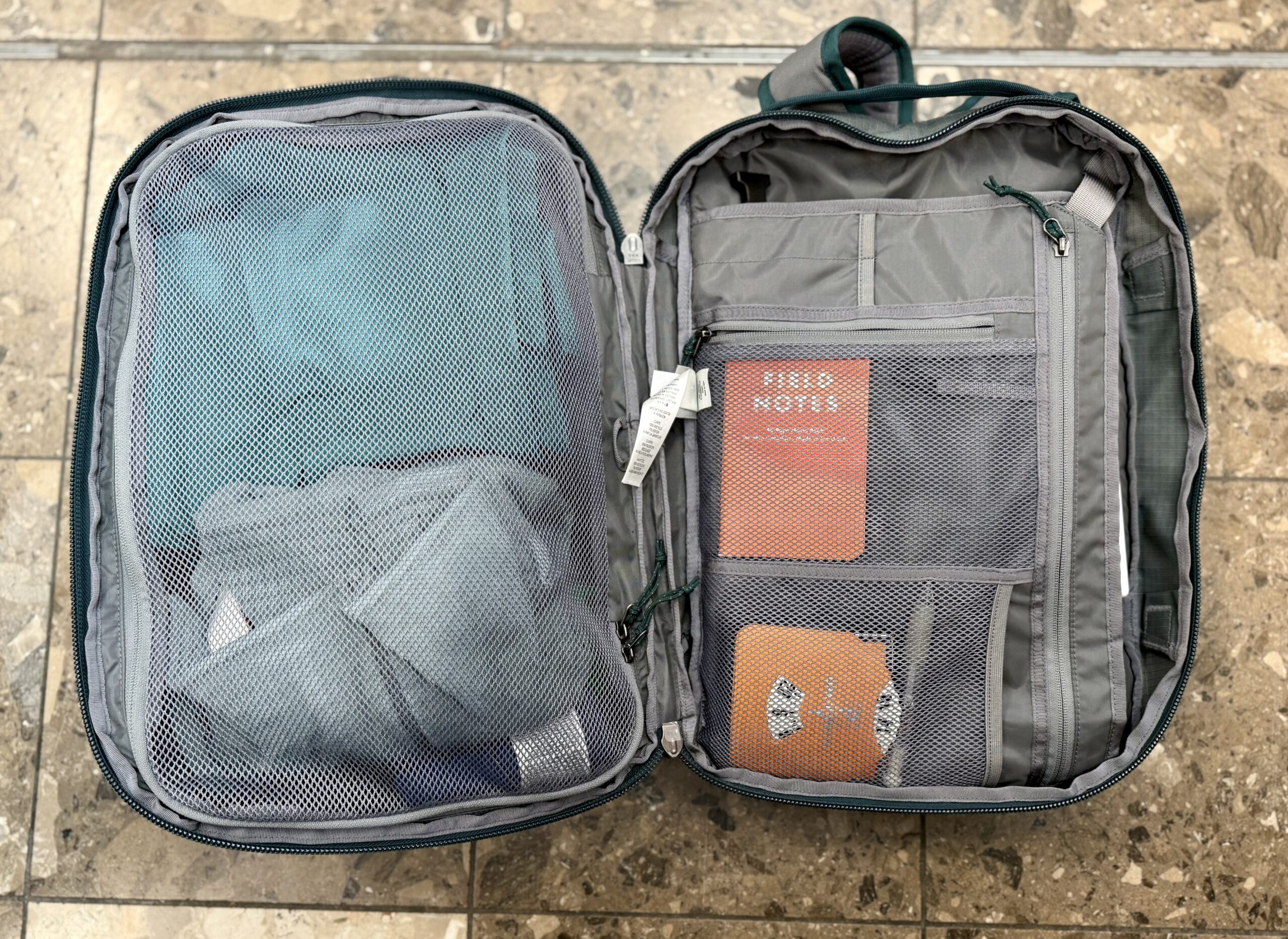
Robert downgraded the size of his backpack for this trip. His prior packs were larger and he found that the larger the capacity, the more you tend to carry, and the more your neck and back can be strained. He opted for a new Patagonia model that works with his new Patagonia carry on. He hopes the backpack is a further deterrent to pickpockets because of the multiple internal compartments.
Laundry
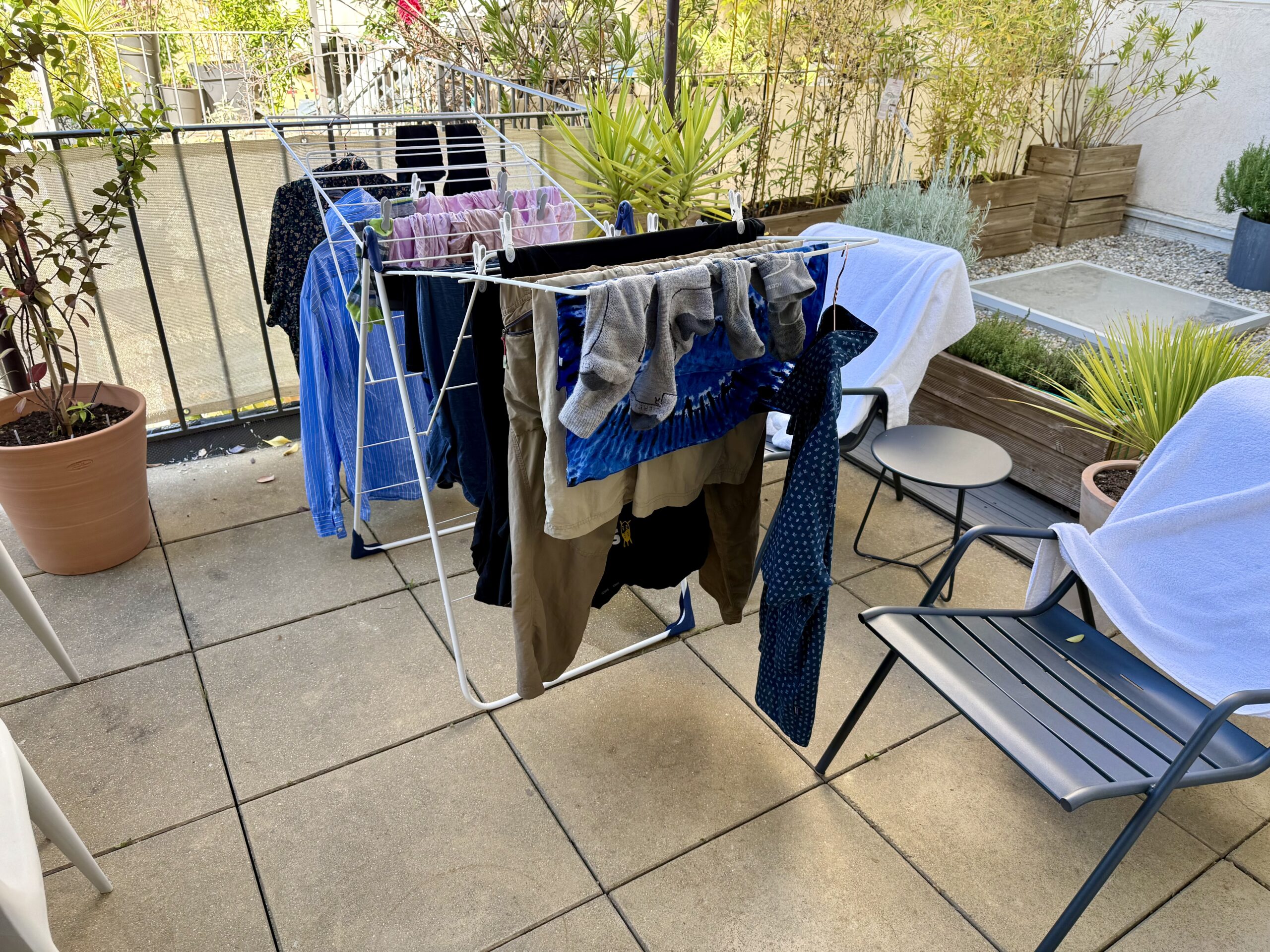
Washing machines are small but sufficient. A wash cycle in Europe can take up to 2.5 hours. Average seems to be 1.5 hours. No dryers. You use drying racks. It usually takes about one sunny day for clothes to dry. We bought a box of laundry capsules and a few clothes pins because there are often not enough pins at the place we are staying.
Packing Cubes
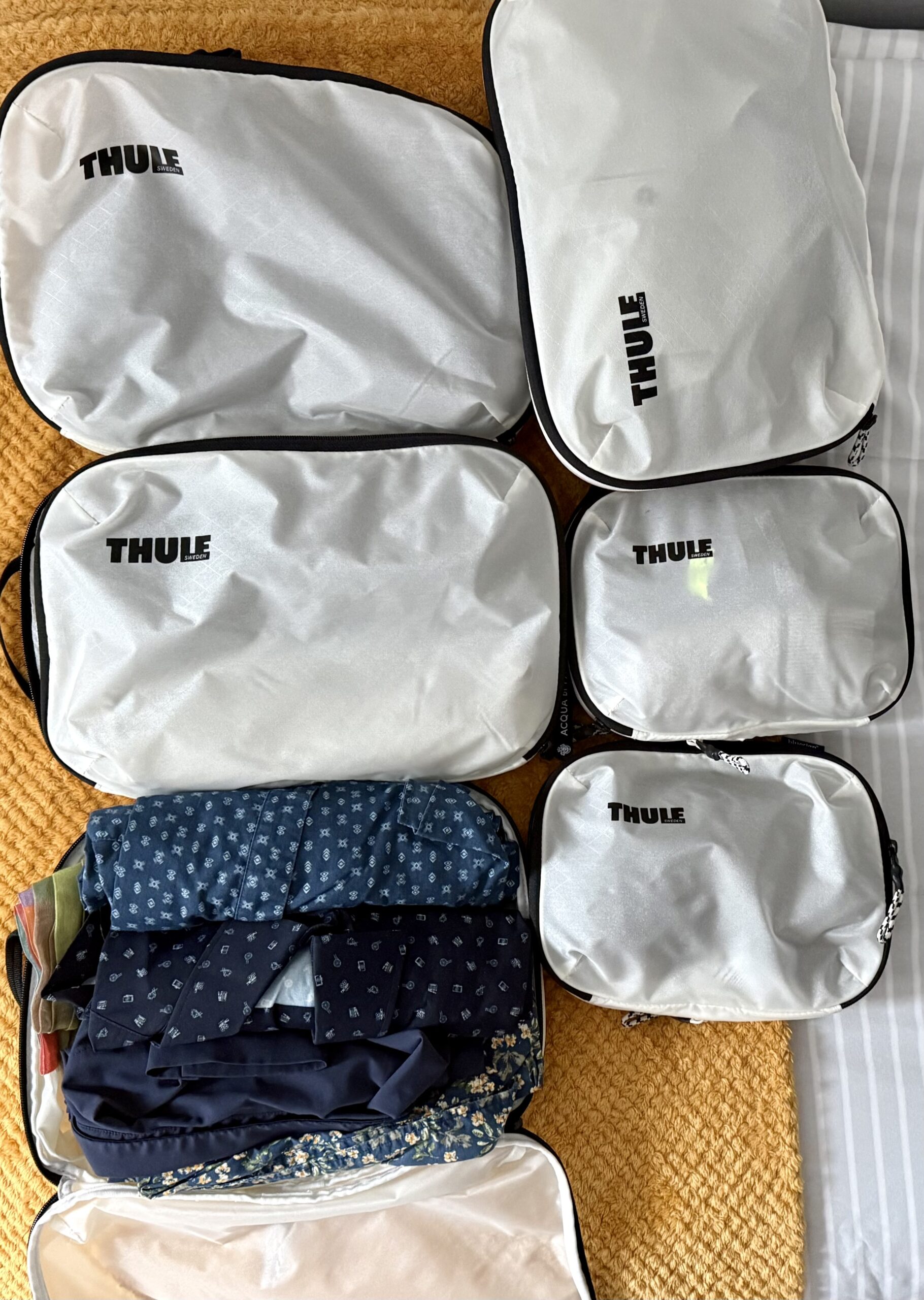
We started using packing cubes on our last trip in 2024 on the suggestion of Richard L. They are great. You roll shirts and pants and they come out with few wrinkles. The cubes can compress, taking up less room in your luggage. However, if your luggage has several separate compartments, these don’t work as well because they don’t squeeze into small spaces.
Finding Places to Eat
Bonnie has been great finding lodging central to many sites we want to see. But in large cities such as Rome this can be a problem because it locates you in the midst of the tourist restaurants with higher prices, aggressive wait staff, and average food.
We rely on three apps: TheFork and the Apple Maps, which allow you to search for food nearby, and Google Maps. These apps all show slightly different places to eat and certainly don’t show everything. And although the ratings on a restaurant are high, we may not agree, especially in a big tourist city. Best to read the reviews, starting with the lowest rated ones. And walking around looking at menus still works well.
Shopping Etiquette
When you enter a shop in Italy or France you must first greet the clerk. Even if you are just browsing. Saying Buon Giorno is enough. But you MUST.
Taxis, Uber, Buses
Bonnie and sometimes Robert used taxis and Uber and found that the situation varied widely from city to city. Often both Uber and taxis are listed on the Uber app so it was easy to compare prices and wait times in advance. In some cities both taxis and Uber were a bargain, but in other cities prices were high. In some cities prices for both were very similar, but in other places quite different. Generally taxis are only available at taxi stands, although Robert went cowboy and often grabbed one stalled in traffic in Rome.
Rome was the most challenging: some drivers demanding cash, some quoting ridiculous prices, some not turning on the meter, very long wait times for Uber, drivers who don’t speak English at all. But none of these things are a serious problem. At most you end up paying a few dollars more if you can’t get on top of the situation. And one of the pluses of cabs is that you often pick up lots of interesting local knowledge in conversations with the drivers.
Buses work well in many cities and are easier to use now that most allow you to tap on with your phone instead of finding a place to buy tickets. And in many cities there is no need to tap off. Bonnie usually googles to find out local bus etiquette. For example, in Edinburgh you always thank the driver as you exit.
Air Tags
We use Apple AirTags in our luggage, carry on, backpack, purse, and wallet. We also bring extra batteries.
Packing Essentials
Bonnie always packs a waterproof jacket and shoes, not just water resistant. Wirecutter has suggestions. The jacket is big enough to wear over a puffy coat if the weather is cold. She is also devoted to her Tide stain removal pens—the Italian cousins now all tease her about them. Messy pasta dinner, no problem. Especially useful because the next washing machine may be a week away. A lightweight crossbody bag is a necessity. She has been using her second generation Sherpani nylon bag that she ordered online.
Guidebooks
Today it is so easy to get information on any city from guidebooks, websites, reels, Facebook, well-traveled friends, Google Maps, booking sites, and television shows that Bonnie felt overwhelmed. Difficult to organize all this information, and once she had it she felt pressured to see many of the places she had noted.
Whew. It was time to take a step back. Unless your trip is very short, it’s surprisingly easy to explore once you arrive, and you don’t have to see everything. One very well-traveled couple she knows, plan only one firm destination a day and leave the rest of the day for wandering and snacking. Bonnie found that asking a few good friends for their top tips, not ALL their tips, was surprisingly effective.
And people’s experiences vary unexpectedly. We had plenty of days in Bologna so while we were there we chatted with cousin Kathy in Nevada City on the phone and asked for suggestions. She gave us four or five places that she especially enjoyed. When we tried to duplicate her experience one day we found that the church was closed for renovation, the museum was closed on the day we were available to go, the tower required tickets from another building and was sold out for the day, and the restaurant didn’t work out. But we did other things that we enjoyed.
For major cities Bonnie likes DK guides, especially those that give top ten lists. But DK was not great for driving among smaller cities in Scotland. For that, Rick Steves was impressive. Lonely Planet was very disappointing. The guides are heavy so Bonnie dumps them as she goes and has none left when she arrives home.
Insurance
We always buy medical insurance. It’s complicated to pick one especially because the length of the trip rules out some choices. The biggest potential expense is medical evacuation. It can be phenomenally expensive. We have friends who have used it. Other medical expenses are usually manageable.
We don’t buy travel insurance coverage, but this is an individual choice. It is quite expensive. Almost everything we book is refundable. We might buy it for an expensive cruise package that is not refundable.
End of Post
Nice to read your travel journals for the past 11 weeks. The wrap-up, notes and tips was a good way to put an exclamation on this adventure.
Cheers – Bob
Thanks Bob. Another trip coming up in a few months.