19 December 2025
Robert wanted to name this post Re-Ruminmating on New Zealand, but that would be redundant.
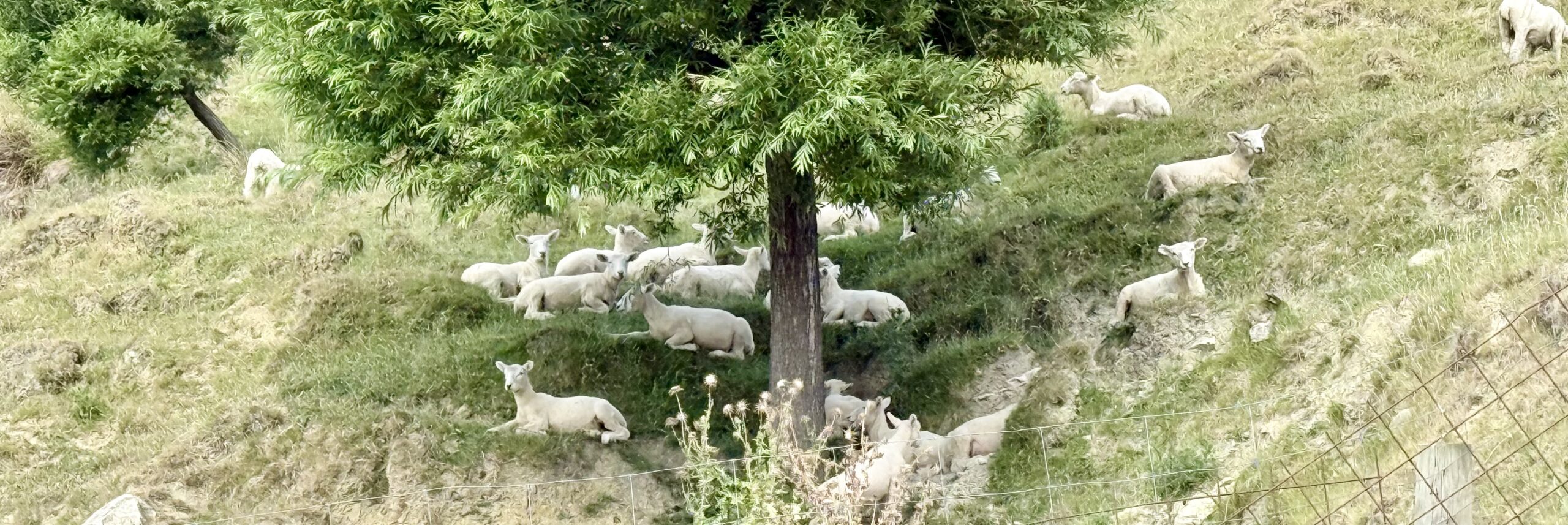
Bonnie often sees cattle and sheep lying down midday, and she wondered why they had stopped grazing. We learned that the animals need time to digest. Actually, the technical term is ruminating. Robert thinks the livestock are contemplating what they have accomplished so far in the day. We took this as a hint to mull over more details of the trip to New Zealand.
Bonnie’s Red Notebook
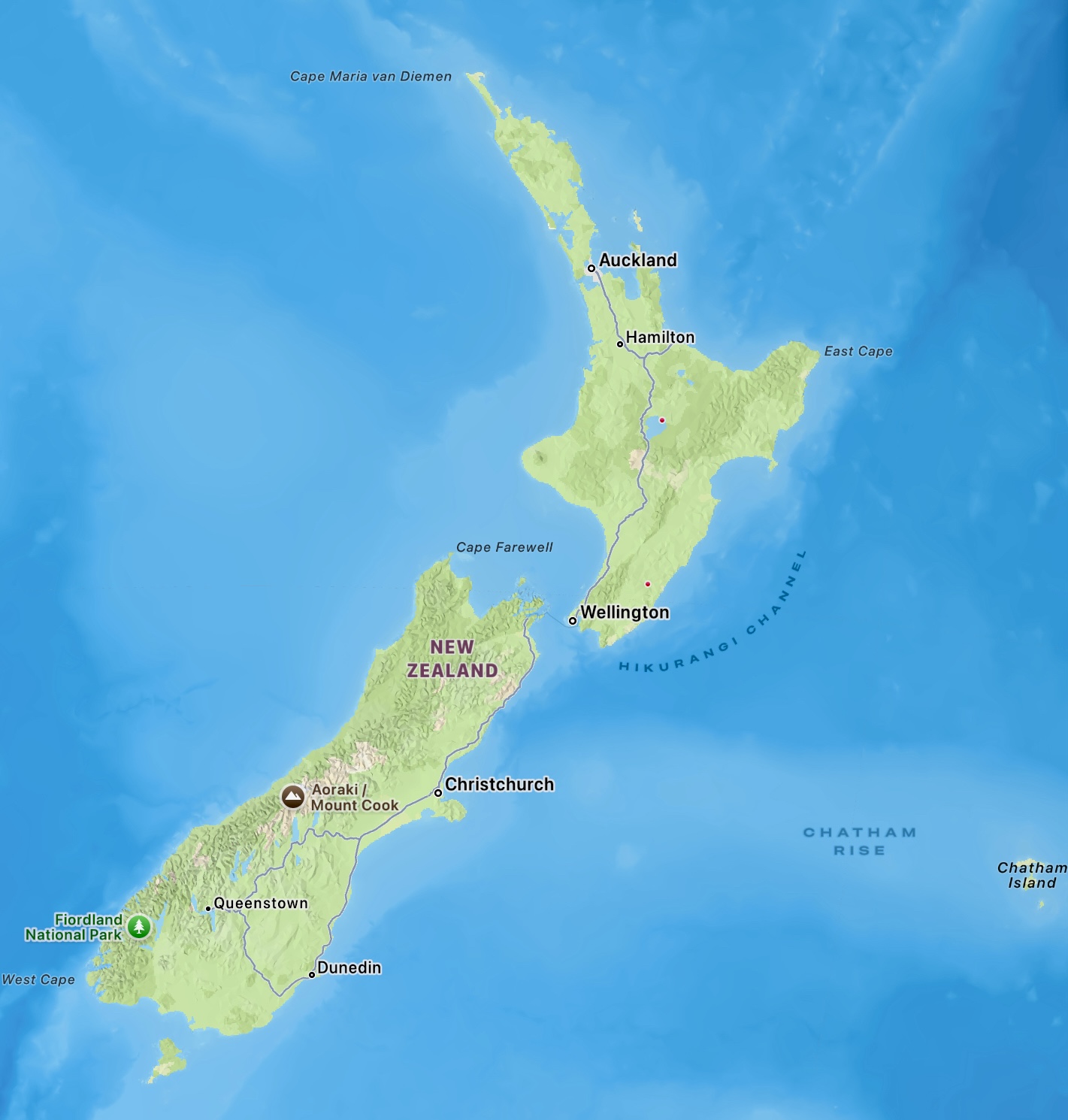
Although we had abundant emails and printouts from our travel agent and more information online, Bonnie assembled the most useful information in her notebook, two pages for each stop, with things like driving time, contact names, addresses, whether the lodging had laundry or AC, Richard and Bob’s schedule, family plans. Much quicker and more convenient than searching through a stack of printouts, or using Google, and foolproof in remote places where we lost reception.
Cocktails
The New Zealand government limits the amount of liquor in a cocktail to one unit of pure alcohol —10 grams—the amount that a liver can absorb in one hour. That means if you order a gin and tonic, you can end up with a lot of tonic in proportion to the gin. Best to order a short glass and a double pour, if the bar’s policy approves.
Contactless Payments (Apple Pay)
Other than tips for the fishing guides, we used cash only a few times when merchants’ machines were not functioning. A sharp contrast to our trip in 2023. The name of the transaction here is payWave and they add a percentage fee requiring your approval. Very transparent.
Places to Consider for our Next Trip
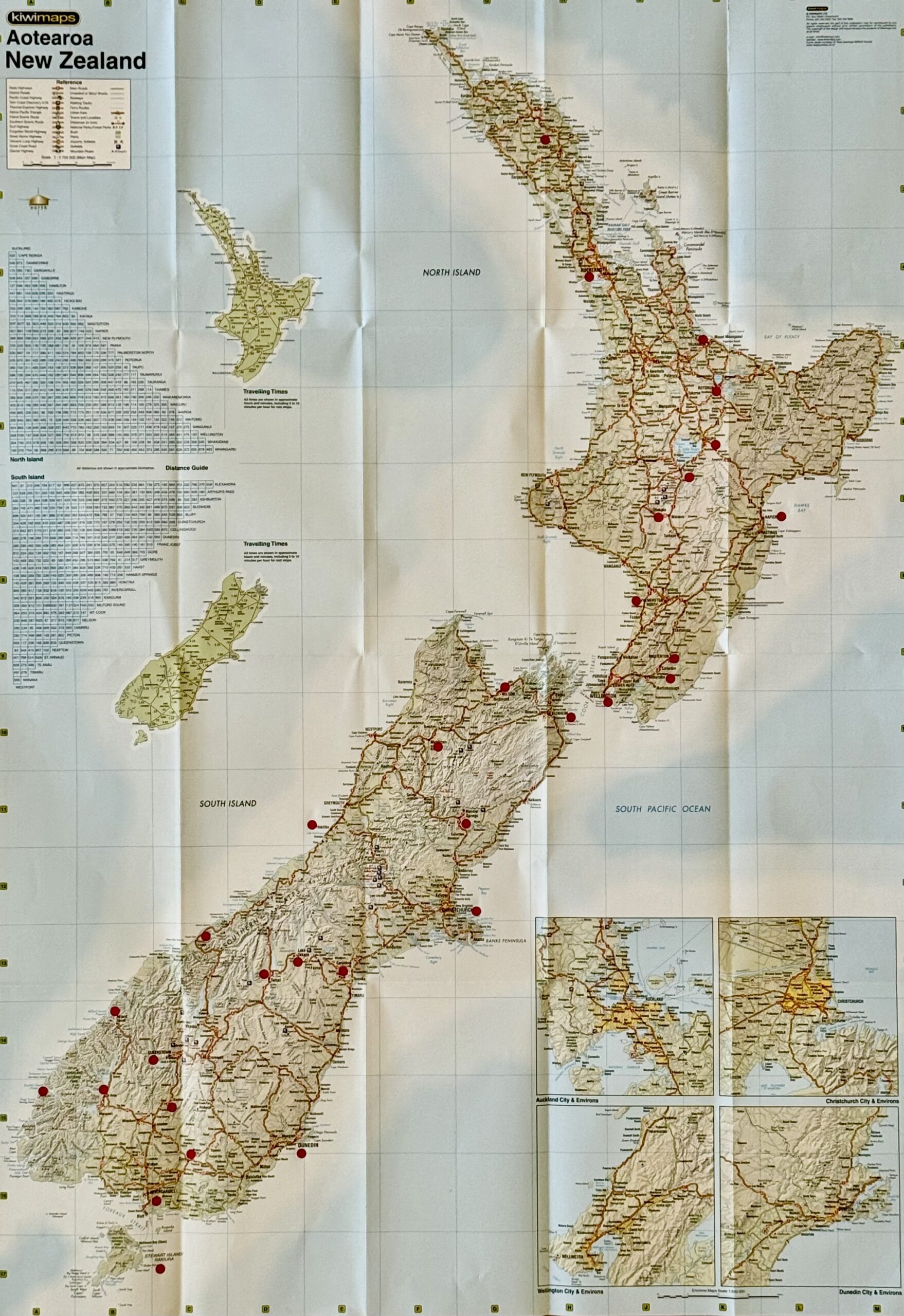
Because this is our third long trip together, we have seen a lot of the two islands. Yet there are more places we can visit and a few we would like to see again.
- Arthur’s Pass, for fishing
- Christchurch, again
- Gisborne, for fishing
- Gore, again for fishing
- Milford Sound, again
- Robson Bay
- Te Anu, again for jet boat fishing and additional river fishing
When to visit
We are thinking of making our next trip in early January or early February to avoid the change of seasons when weather is unsettled. That period will offer more dry fly fishing. But it also offers an abundance of sand flies.
Trees
The trees in New Zealand are uninhibited in their growth. Not unusual to see poplars growing 80 to 100 feet. Truly tremendous. Students of landscape architecture need a trip here to really appreciate what the New Zealand environment accomplishes. Of course if you are a Monterey Pine growing for wood production, your years are numbered to around 25 when you are harvested, placed on a logging truck, and shipped off to the mills for processing.
Wet Wading
Although the weather and water was a bit cool on this trip, on the next trip, in addition to using waders, Robert will plan to wet wade using wading boots and quick drying pants.
Chemicals/Poisons
To outsiders, New Zealand seems like an environmental paradise. But trying to keep it that way requires an alarming amount of poisons. The best way to kill invasive trees that threaten the native woodlands is not cutting or fire, which only spread the seeds, but injecting each tree with a poison. New Zealand’s native birds are decimated by imported rodents from rats to possums. Again, government-sponsored campaigns use poison to eliminate them.
Lamb in restaurants
We rarely found lamb on the menu at New Zealand restaurants, and when we did it seldom seemed as good as what we eat in California. A puzzle. Is most of the lamb shipped overseas?
Milk at Motels
New Zealanders maintain their British heritage of drinking tea. So lodgings always leave a small carton of milk for you in the refrigerator of your room or hand you a bottle at the check-in desk. Very sweet.
Livestock in Trucks
We arrived in early November at the height of lambing season and watched adorable little ones bouncing after their mothers. By late December the scene shifted. Time to ship the lambs worldwide for Christmas dinners. An entirely new type of truck appeared on the highways. Double-decker with slits for windows and shreds of wool streaming from the sides. On many farms we noticed lambs tightly clustered in a small field near the road, ready to be loaded.
Men in Shorts
Kiwi men wear shorts year round, no matter how cold it is. Especially on farms. Preferably black. Preferably with a black tee shirt. (You know that the famous New Zealand rugby team is the All Blacks.) Bonnie remembers that shorts were part of the year round school uniform for boys in her class. They train them early here.
IKEA forests
While we were there, IKEA opened its first store in New Zealand to great hoopla. The Auckland suburb where it is located squawked about the increase in traffic, and, indeed, when we passed the closest motorway exit on a weekday afternoon, a double line of cars jammed the road. But another part of the story is that IKEA is buying vast tracts of land in New Zealand and planting trees for the carbon credits. Economists say the way to boost NZ economy overall is to expand pasture land for sheep, dairy cows, and beef cattle, but at the moment that isn’t happening. Critics allege that the land planted in trees will be lost as pasture permanently. A controversy that will probably get more heated.
Need a Paper Map
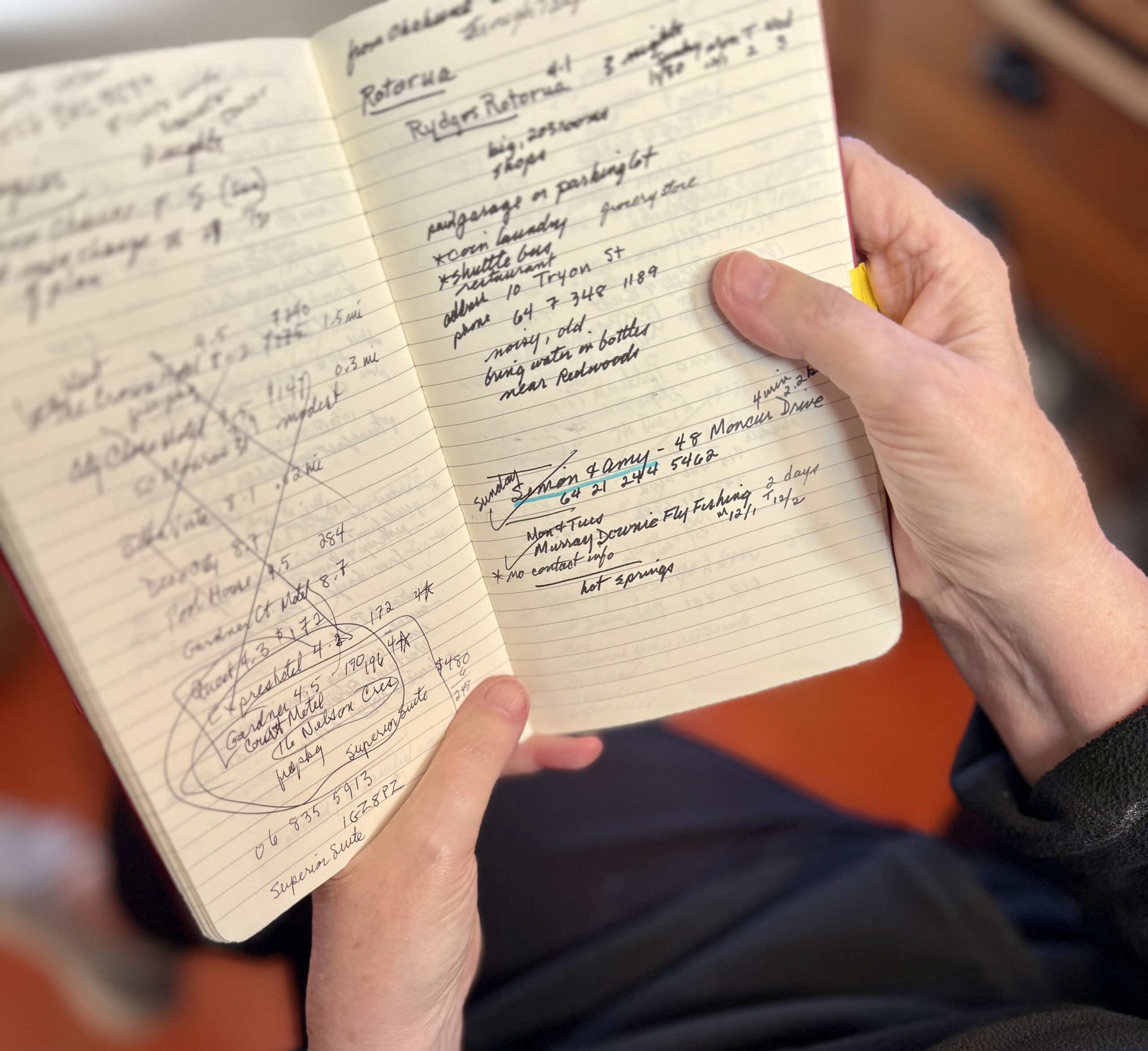
Next time we will buy a paper road atlas although they are big and heavy. Navigation on screens isn’t enough. It doesn’t give you the big picture. It doesn’t show smaller roads. And sometimes it fails.
That’s all for now. Back to grazing (planning) our next trip.